Be yourself; Everyone else is already taken.
— Oscar Wilde.
This is the first post on my new blog. I’m just getting this new blog going, so stay tuned for more. Subscribe below to get notified when I post new updates.
Be yourself; Everyone else is already taken.
— Oscar Wilde.
This is the first post on my new blog. I’m just getting this new blog going, so stay tuned for more. Subscribe below to get notified when I post new updates.
Today the current socio-technical regime believes that the future of our world lies in the development of new technologies, well at least this is what Jeff and his collaborators believes. Jeff Schneider- is the speaker of a Ted talk called “How Self-Driving Cars Will Transform Our Cities and Our Lives” presented in 2017. He argues that self-driving cars are the solution for a safer and better future, especially in cities. However, does self-driving cars ensure us a safer future in terms of mobility? Does he depicts a future we as citizens would like to live?

A thought-provoking TED-talk called “How Self-Driving Cars Will Transform Our Cities and Lives” (Schneider, 2017) argues that car accidents are the top third causes of human death on our planet. He claims that the root causes are mainly due to the recognition and decision errors of human drivers, as they are being immersed in a multitude of information, especially while driving in the city. In his talk Jeff mentions, I quote: “the only way we are really going to make progress is if we figure out how to have that car drive itself” (Schneider, 2017). We can agree that from a technological perspective, having self-driving cars is progress. But we can question if technology is a progress for the well-being of humans and thinking in a bigger picture, our planet. Are self-driving cars the solution for saving our lives? What about the amount of deaths caused by car toxic pollution? Human deaths caused by car accidents are certainly easier to record than deaths caused by emissions of motorized vehicles. For the reason that death caused by pollution is hard to identify and accumulate empirical evidence over longer periods of time which results in increasing the likelihood of those deaths. Contrastingly, car crashes are tangible materializations with an instant effect, which can more easily be counted. If we could take in consideration deaths caused by car emissions, we might have more deaths caused by cars than what Jeff presents in is talk.
Furthermore, by enabling self-driving cars in cities, what kind of habits and patterns is Jeff supporting? He implies that car is the solution. This means that our habits of driving in the city isn’t seen as the issue but that supporting the development of the problem lies in the accidents caused by the driver. This means that in his discourse Jeff doesn’t question the current socio-technical system set in place by supporting the car regime. By advertising for self-driving-cars he is in fact reinforcing and supporting the use of cars in cities. Which implies that he legitimates the prioritization of cars instead of other transportation types in cities. However, cars are designed to transport drivers and passages from a point A to a point B without physical effort. This implies that Jeff support the idea that cars – a transportation technology that require no physical effort- is necessary in cities. In other words, by peaching in favors of self-driving cars he also implicitly argues that cars should stay the normative transport in cities. By deduction he maintains the idea that effortless physical mobility such as cars in cities is the solution for our future.
Do you agree with those thoughts? Do you agree with a vision of car-crowded cities, impeding the luxury of fresh air and a healthy active lifestyle? The future is whatever we depict and work towards. Fortunately, there are alternative futures and ways to get there. keep reading…

Jeff’s TED talk presented us an undeniably complex and fascinating technology, however through his talk he isn’t offering us a future that accentuates traits of a sustainable transition. Self-driving car is an innovation that follows the instilled technological trajectories. This paradigm embodies the believe that solutions lies in technology. Those widely spread thoughts constitute our current socio-technical regime until now (Geels, 2002). But initiating a sustainable transition goes beyond just research and development of new technologies. A sustainable transition aims at achieving a radical change of regime, which includes the transformation of multiple aspects of our socio-technical regime.
We consider that a technical innovation as he proposes is not ambitious enough. He has a restricted way to look at a change. In order to think about a pragmatic future, we can’t only discuss technology, we also need to discuss all the other socio-technical aspects that it will affect. As Geel’s support on the Multi-Level Perspective theory (MLP), for a regime transition to occur, not only technology has to be taken is consideration but we also need to reconsider the broad perspective. In this broad perspective, multiple other factors play important roles, such as the change of consumer behaviors, value, culture, meaning and industrial infrastructures, etc. (Geel, 2002). Those aspects need to be taken in account to create an alternative and pragmatic vision of tomorrow’s regime.
Furthermore, we believe that in order to save lives we need to rethink the system and propose a sustainable transition that goes beyond self-driving cars. Today 2 Planetary Boundaries (PB), Biogeochemical flows and Biosphere integrity are being overpassed. Additionally, 2 other PBs such as Land Use Change and Climate Change are reaching their limits. Those 2 last boundaries are showing, until a certain extend, the usage of motorized vehicles. Especially the Climate Change PB which include the level of CO2 emissions emitted by cars. The concept of PBs relies on scientific measurement that allow us to visualize the planet’s resilience tipping points (Rockström, 2015). Without resilience there isn’t stable ecosystems and life on earth will suffer from destructive overconsumption of its resources. Therefore, it is important to shape sustainable transition visions, to enable the implemented of innovations that belong to a prosperous future which respect the PBs. Nevertheless, Jeff doesn’t mention any technology shift that enable cars to pollute less, we can thus consider that those self-driving cars might contribute to the degradation of our ecosystems. Besides, sustainability also lies in the way innovations are qualified and car pollution is today left out as a negative externality (Callon, 1998). This means that cars or self-driving cars pollution emitted do not count as a tangible problem for the economy. Those externalities may have a negative impact on our health (Sattar et al., 2016) but remain market overflows that allow Jeff to promote self-driving cars without questioning the negative impact they might have on us and the PBs.
Meanwhile, his solution is still at a local experimental level. Let’s look at self-driving-cars as if it was at a niche scale, to use Schot and Geels vocabulary – which is in itself an assumption that can be discussed. Throughout Schneider’s TED-talk he communicates to the world that a new technology is coming. This way, he implants seeds in people’s head to facilitate self-driving cars to break-in the market and the socio-technical regime in place (Schot and Geels, 2008.). But Geels and Schot theory should be applied to innovation that change or will change our current regime and affect our habits and lives. Is it the case with self-driving cars? Furthermore, on one hand we all know that cities are polluted and that the pollution emitted by vehicles is increasing. That cars in cities take up a lot of valuable spaces as he himself agues. What if we wouldn’t for once put technologies in the center of our preoccupation, but would put our health instead? By doing so, we would prioritize our well-being and hopefully the well-being of the environment around us. What if instead of commuting by car and going to the gym in the evening, we could use our bodies to transport ourselves to work?
Cars have multiple negative impacts on human health and therefore affect people’s life expectancy as well as their life’s quality. Besides affecting our health with its pollution, cars can also have a negative effect on our weight. Studies show that we have around between 20% and 30% more changes to be obese if we commute by car on everyday bases (Ding, 2014). What if sport and healthy lifestyles were the new vision for a sustainable transition? Instead of focusing our energy on maintaining the current socio-technical regime and invest time and money on self-driving cars, we could shift and use the energy of our bodies to commute. In a near future, Copenhagen could see cars being removed from the urban environment and deploy its resources for the development of sports and well-being in the city’s streets. In order to decrease the risk of become obese, we could encourage Copenhagen citizens to use different sports to get around the city. Even if biking is already a well-established mode of transport in the city and that a large fraction of the population bikes to work cars remain prioritized, especially on the main boulevards. By experience, large numbers of people commuting by bike are constraint to share narrow bike paths build on the side of those avenues. Therefore, we propose that streets become prioritized for all different sports that allow us to move with the energy of our body. For example, large bike paths could replace car roads. Electrical bikes and other non-motorized transport innovations would be subsidized. Bike paths could become running lines with a ground adapted to it. The idea would be to encourage people to enjoy their commuting journey instead of rushing to work. Besides, the city would be reorganized to strengthen social relationships and the local economy in neighborhoods. This could be done by engaging a collaboration with relevant stakeholders to co-design the layout of such neighborhoods. A sustainable transition guideline would be followed. Activities such as workshops, prototyping sessions and creating future scenarios would be organized (Gaziulusoy and Ryan, 2017). By enabling such a transition car pollution in cities would be drastically reduced or even abolished and the clean air would allow citizens to practice sports in healthy conditions.
Focusing on our health and making us better humans would mean that this regime would be made for us. It would be there to take care of us as humans being. For most of us, every day we go to work and hope to contribute to a better world. But if we don’t enjoy our work and life, for who are we making a better world?
Throughout the deconstruction of Jeff TED-talk and the introduction of a new storyline, we have shown you 2 different visions of what the future might have to offer. On one hand, there is Jeff story that refers to the current socio-technical regime narrative which believes that technology will save us. He argues that self-driving-car is the solution since humans won’t have to drive and thus cause less car accidents. On the other hand, we discussed the urgency there is in shifting towards a sustainable transition in order to stay alive and healthy as human beings. We believe that in order to reduce or eliminate the death caused by car we would focus our energy on improving cars but rather implementing a sustainable transition aiming to rethink the city’s mobility. As we argued car pollution might cause more death that the data shows, but also that the usage of car increase by approximately 30% your chance of becoming obese. Those main arguments show that those death caused by cars in cities might need to be solve by looking at a broader picture then only the implementation of a new technology. We want a sustainable transition!
So after reading this article, how would you like to imagine your future life? Do you still agree with Jeff paradigm and have the intention of buying a self-driving car or follow us in a sustainable transition based on protecting our health and respecting the Planetary Boundaries?
__________________________________________________
References:
Callon, M., 1998. An essay on framing and overflowing: economic externalities revisited by sociology. The Sociological Review, 46(1_suppl), pp.244-269.
Ding, D., Gebel, K., Phongsavan, P., Bauman, A. and Merom, D. (2014). Driving: A Road to Unhealthy Lifestyles and Poor Health Outcomes. [online] Available at: https://www.ncbi.nlm.nih.gov/pmc/articles/PMC4049576/ [Accessed 13 Feb. 2020].
Downeyobesityreport.com. (2020). European Union » The Downey Obesity Report. [online] Available at: http://www.downeyobesityreport.com/tag/european-union/[Accessed 13 Feb. 2020].
Gaillard, R., 2016. Rémi GAILLARD OLYMPICS. [online] YouTube. Available at: <https://www.youtube.com/watch?v=ab8HyNa6hjY> [Accessed 24 March 2020].
Gaziulusoy, A.İ. and Ryan, C., 2017. Shifting conversations for sustainability transitions using participatory design visioning. The Design Journal, 20(sup1), pp.S1916-S1926.
Geels, F.W., 2002. Technological transitions as evolutionary reconfiguration processes: a multi-level perspective and a case-study. Research policy, 31(8-9), pp.1257-1274.
Rockström, J., 2015. Bounding the planetary future: Why we need a great transition. Great Transition Initiative, 9, p.5
Sattar, et al., 2016. Airborne Infectious Agents And Other Pollutants In Automobiles For Domestic Use: Potential Health Impacts And Approaches To Risk Mitigation. [online] Journal of Environmental and Public Health. Available at: <https://www.hindawi.com/journals/jeph/2016/1548326/> [Accessed 25 March 2020].
Schneider, J. (2017). [online] Youtube. Available at: https://www.youtube.com/watch?v=CHV4AiCvSmw [Accessed 28 Feb. 2020].
Schot, J. and Geels, F.W., 2008. Strategic niche management and sustainable innovation journeys: theory, findings, research agenda, and policy. Technology analysis & strategic management, 20(5), pp.537-554.
Virtuos. 2018. Virtuos Contribues To Transformers: Age Of Extinction. [online] Available at: <https://www.virtuosgames.com/ko/virtuos-contribues-transformers-age-extinction> [Accessed 26 March 2020].
Written by: Dunia Jørgensen, Edited by: Xenia Weulersse
If you imagine a worldwide sustainable transition, do you imagine empowering other countries to gain economic power and become self-sufficient at their own terms, or is the narrative of technology empowerment through charity and development work emerging foremost? Or maybe ‘underdeveloped’ countries will remain the testing ground for developed locked-in countries? When outsourced industries enter grounds of low governance and unstable regimes, the risk of undermining the norms of the context are high. Here is where damage occurs, regardless of intentions and the efficiency of the technology. By taking a closer look into water problematization areas, we can see the contradicting effects of industries and governments from a sustainable transition perspective.
In a collectively imagined sustainable future, distributed responsibility is not only a challenge for governments to align with, break down into actionable goals, but also the recognition that the vantage point of departure on a global scale is challenged by resource and economic disparities. Due to the homogeneity requirements for collective imagined futures, among others, Escobar criticises the field of Sustainable Design as being focused on reducing ‘unsustainability’. A globalized universality paradigm needs adjustment towards pluriverse perspectives, he states: the goal being coexistence of many worlds in the same place (Escobar, 2011). If diversity and multitudes are to exist, how can we fairly distribute responsibility across unequal nations, whose ecosystems are shared?

One can argue in such case, that water availability depends on the geological aspects of a region, predisposed by nature in areas of resource abundance, while others are naturally scarce e.g. desserts. But in these days, resource management are also directed through political decisions. Think about refugee camps, emergency areas and military bases. Where resources are needed, these can be allocated and provided.
Human technological advancements have further opened up the portal of possibilities rather than limitations by nature. It is no longer excusable to withhold the premises of resource limits in certain regards, with the exception of harmful substances for the environment, such as coal-based resources. But certainly not when it comes to resources deemed by the United Nations as Human Rights and included as one of the 17 Sustainable Development Goals (SDG’s).
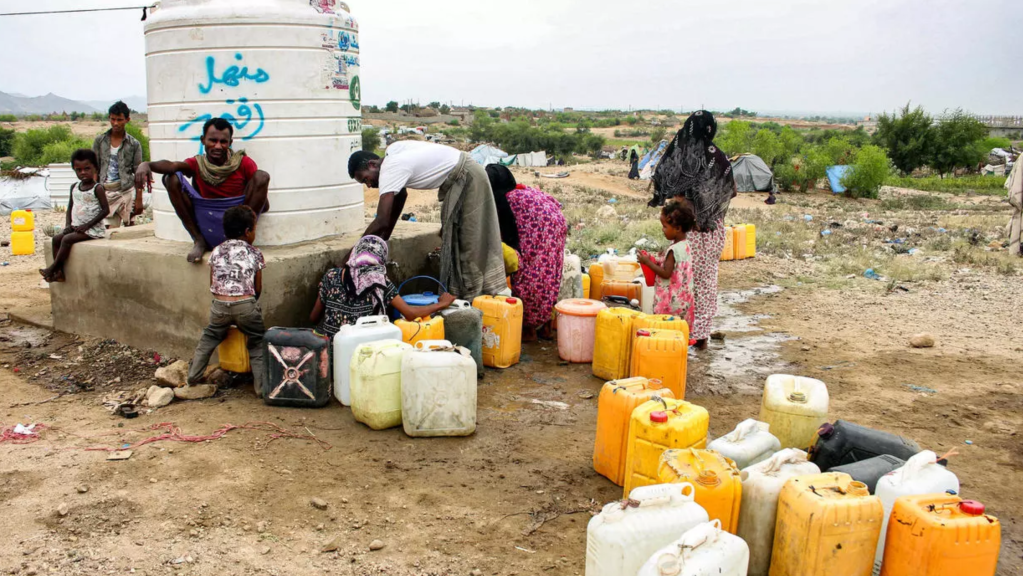
Water – the essential element of dignified life
The sixth goal, states: “Ensure availability and sustainable management of water and sanitation for all” (United Nations, 2015). It is transparently clear to all humans capable of reading this sentence, that water is another one of those matters of concern to us, at all levels. Individuals to planetary ecosystems.
Earlier even, The General Assembly at the United Nations recognized water accessibility and sanitation as a basic Human Right, stating that access to water should be affordable and physically accessible to all (United Nations, 2010).
Our dependency to water is undeniably long and integrated to our planet’s fundamental eco-biological systems’ homeostasis. Regardless of where you are born, whether framed as developed or underdeveloped, the need for water is indifferent on who’s lips it lands on with it’s crumbling thirst.
In Denmark however, groundwater reservoirs hold the status of abundant, as the water quality is drinkable when abstracted, requires little filtering for it’s consumption (although emerging pollutants are increasingly proposing a challenge to this statement through pesticide, fertilizers, pharmaceuticals and micro-plastics concentrations) and no additives (such as chloride) need to be added for it’s usability. We are geologically blessed, technologically capable and somewhat politically engaged to tackle these issues – also increasingly aware and proactive regarding flooding events due to climate change in the future.
What is our role then, in the larger global picture? If we can individually and politically-broadly agree that water requires international cooperation for it’s access and fair distribution, what is then left to do?
The role of transnational industries & the innovative west
In the same report mentioned earlier by The United Nations (2010), the following fact-box is to be found:
“About 90 per cent of sewage and 70 per cent of industrial waste in developing countries are discharged into watercourses without treatment, often polluting the usable water supply”
United Nations, 2010 ,pg. 9
Looking at the largest transnational companies for water supply and treatment technologies such as Veolia, SUEZ, SNF, Pentair, Parker-Hannifin, one can trace their Although today’s products are composed of various elements produced across nations, and also end up being used in various places, the credit is simplified to singular overarching manufacturers. Looking at the largest transnational companies for water supply and treatment technologies such as Veolia, SUEZ, SNF, Pentair, Parker-Hannifin, one can trace their origins to USA and France. Leading technological solutions stem therefore mostly from the western industrialized societies and are largely attributed to their development. This means that we also actively contribute to their further development by aiming to acquire clean water elsewhere.

Simultaneously, leading industries responsible for environmental water pollution and resource use are also attributed from the western industrial hemisphere. A study by Zhou and Li from Michigan University, points out: “a significant number of U.S. firms reduce their pollution at home by offshoring production to poor and less regulated countries.” (Zhou and Li, 2017). Loorbach points out, the co-evolving of collaborative networks and governance affects the societal structures and shapes the governance structure of a regime. Policy-making in that regard “becomes less transparent; the division of power, as well as the accountability issue, is no longer clear[…]” (Loorbach, 2010) In such cases, who is to be held accountable and how?
Carlsberg Group, a worldwide brewer with headquarters and roots in Copenhagen, published among others, a ZERO Water waste initiative aimed to reduce the water usage in brewery operations. This initiative is framed by their report to be ambitious and aims at reaching a reduction of water usage down to 50% by 2030 (Carlsberg Group, 2019)
In 2018, a Carlsberg brewery in Nepal was found to be the source of pollution in the third largest river (Narayani-river) and its nearby natural areas (Pedersen, 2018). Upon questioning, Carlsberg firstly denied being responsible for the severe pollution which was damaging the biodiversity of the area. It is not the first time Carlsberg breweries have being found by external auditors (like Danwatch) to have polluted regions around the world, as incidents in China, Laos and Malawi were reported years earlier.
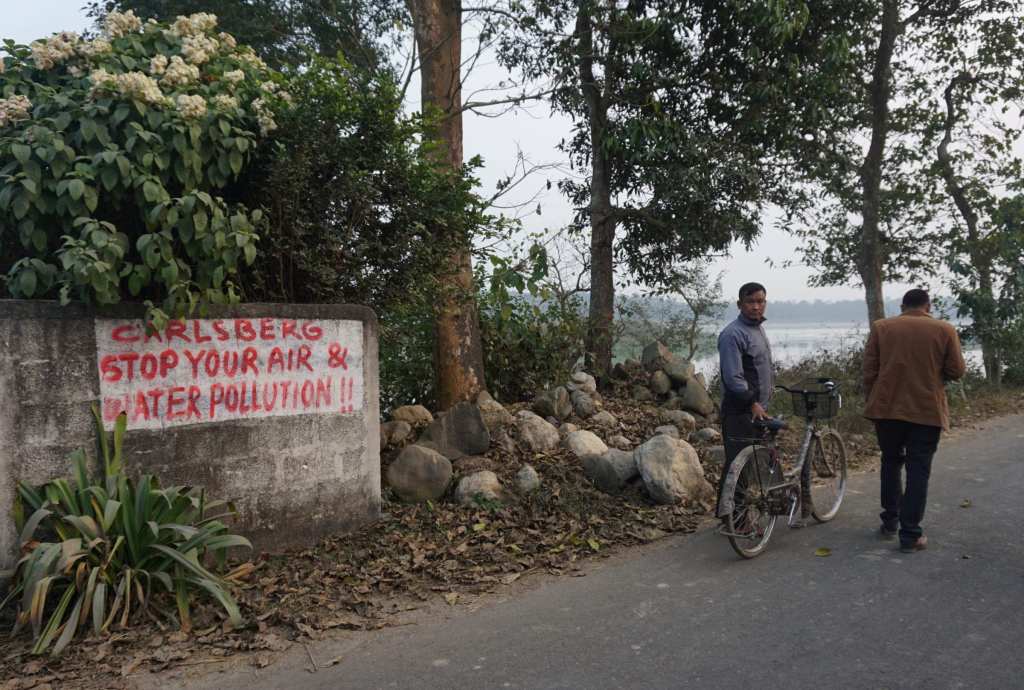
Cheers! Technology fix for an eco-efficient future
Water treatment projects are complex orchestrations of socio-technical kind which can turn out damaging, much more than sustainable if left out in the positivist paradigm that proliferated along development work in the ‘global South’. In other words; myopic, if these are treated as merely discrete technical projects separated from their role and effect in shaping the context’s socio-political dimensions (Jensen et al, 2015). Areas in which infrastructure and law-enforcement (including fundamental environmental legislation) is lagging, proves as good grounds for experiments. Smith reminds us that the stability of a regime is a parameter of high influence towards niche adoption: when niche stability is high and regime stability low, opportunities for niche influence reach their highest (Smith, 2007). Therefore, in so-called underdeveloped areas, innovation fertility can be favorable, the question is still for whom and how do these affect their context? If a strong niche approaches an unstable regime, does a crisis-led-regime shut doors or let’s anyone in for heroic actions?
The newest green technology emerging from a triple-helix private collaboration with Danish stakeholders -within technology, water governance and industry- found a financially viable way to reuse water within a circular closed-system. This system has been successfully piloted and found investments at the Carlsberg Fredericia brewery in Denmark. Millions of Danish Kroner (DK currency) are now set aside to scale the technology in other breweries around the world.
For Carlsberg, it can be a winning situation to both be able to brand and qualify themselves as a sustainable enterprise at home-base aswell as a eco-efficient expert industry towards the local governments which provide permits to install breweries. It also could potentially lessen cases of pollutants such as the one in Nepal.
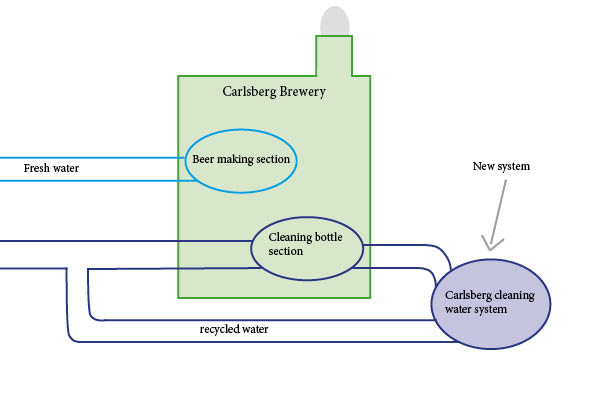
For environmental sustainability overall and financial viability executed through this technology, these are good news. Is the problem fixed then, when it comes to sustainable transitions for developing countries dealing with water resource scarcity? If Carlsberg truly aims to establish a long-term sustainable strategy, it is not enough to focus on energy or water efficiency. The land covered by their breweries will still be land taken.
#1 Design strategy: Investigate Practices and power effects
Practice Theory, a field which aims at understanding practice as an entity constructed of materials, objects, symbolism, competences, skills, etc. also takes into account power and governance. Watson (2017) explains:
In accounting for both social change and the reproduction of social stability as the result of human action, practice theory is inherently about power, if power is seen as capacity to act with effect.
Watson, 2017
If power is an effect, the practices embedded unveil the allowances and constraint of a system and individuals within. Practices can furthermore reveal the norms implicit in a defined context and broadly. It is therefore important to recognize how practices are related in across varying sites, and to what extend the local norms are supported by the suggested practices. When it comes to the Carlsberg, to understand the cultural norms in the intended places of installment, should be an important factor to consider. How does the local context perceive water? What are the practices attached to water processing and brewing? Adding the perspective of power as an effect, it is also foremost good to deconstruct the normalities surrounding the technological innovation. This practice inspection can be done at the Fredericia brewery. Once this is done a critical look at which normalities are context dependent and non-transferable to their intended context is essential.
#2 Design Strategy: Develop or adapt technologies in the context
In a Strategic Niche and Transition management perspective towards social innovation and adoption of systems innovation, the plasticity of so-called underdeveloped areas provides grounds for sustainability to co-emerge, as Ceschin undelines:
“If we want to effectively tackle sustainability, there is a need to move from a focus on product and production improvements only, towards a wider approach focused on producing structural changes in the way production and consumption systems are organized. In other words we need radical innovations.”
Ceschin, 2014, 1
If Carlsberg, Lifestraw and other technology stakeholders would invest time in applying co-designing practices as part of the development strategy the chances are that the products emerging will have a chance to stabilize in the regime. This also enables the creation and recognition of local value, empowering societies at multiple levels. As Ceschin suggests, the establishment of Living Labs, enable not only the technological niche to adapt, but also it does so under protected environment from a rigid regime. The benefits to knowledge enabling, exchange and participation should not be isolated to the engineers in Carlsberg. This puts the transition to continuously only bring few along sustainable prosperity long-term.
A true source of pride in our mirror image
A sustainable transition within life-essential resources should not only entail, finding ways to which radical innovations can survive and affect the current regimes and status-quo. It should also face the limitation of resources and stir the waters of the fundamental inequality reinforcing structures large transnationals thrive upon. If we all are responsible to the extend of our knowledge and actions, shouldn’t we also be held accountable for them? The answer is yes, as much as we take credit for development, we also need to take accountability for the harm done, also when it is outside our local boundaries.
We should recognize that the power dynamics along all, need attention to transition too. The sacrifice for our westernized enterprises lies also on letting others gain empowerment, influence the course of innovation and lead the adaptation of new technological species, such as the one by piloted Carlsberg. We might not be nr. 1 within innovative water technology, but we can exemplify how a sustainable technological transition can be realized, also for long-term benefits of those who need it.
REFERENCES
Carlsberg Group (2019) Sustainability Report 2019 [online] Available at: https://www.carlsberggroup.com/media/35965/carlsberg-as-sustainability-report-2019.pdf [Accessed 18/03/20]
Ceschin, F. (2014) How the Design of Socio-Technical Experiments Can Enable Radical Changes for Sustainability,International Journal of Design, Vol. 8 (3), pg. 1-21
Escobar, A. (2011) Sustainability: Design for the pluriverse, Society for international Development, 52(2), pg. 137-140
Hajjah, A. (2020)Hand-washing: a luxury millions of Yemenis can’t afford, France 24, AFP, Yemen [online] Available at: https://www.france24.com/en/20200324-hand-washing-a-luxury-millions-of-yemenis-can-t-afford [Accessed 26/03/20]
Jensen, J. S., Lauritsen, E. H, Fratini, C.F. Hoffmann, B. (2015) The harbour baths and the urban transition of water in Copenhagen: Junctions, navigation, and transition mediators, Environment and Planning A, 47(3) 554 – 570
Millan, A. (2015) Danes deliver clean water to 200,000 in Kenya, The Local DK [online] Available at: https://www.thelocal.dk/20151102/danish-projects-biggest-private-donation-in-africa [Accessed 26/03/20]
Pedersen, C. B. (2018) Knuste flasker og forurening belaster Carlsberg bryggeri i Nepal[online] Available at: https://www.dr.dk/nyheder/penge/knuste-flasker-og-forurening-belaster-carlsbergs-bryggeri-i-nepal [Accessed 18/03/20]
Smith, A. (2007) Translating Sustainabilities between Green Niches and Socio- Technical Regimes,Technology Analysis & Strategic Management, 19:4, pg. 427 – 450
United Nations (2015) Transforming our world: the 2030 Agenda for Sustainable Development, General Assembly, Resolution adopted by the General Assembly on 25 September 2015
United Nations (2010) The Right To Water: Fact sheet nr. 35,, Office of the UnitedNations High Commissioner for Human Rights, Switzerland,Geneva [online] Available at: https://www.ohchr.org/Documents/Publications/FactSheet35en.pdf [Accessed 18/03/20]
Zhou, Y.M. and Li, X. (2017) Offshoring Pollution while Offshoring Production?, Strategic Management, Vol 38, 11, November 2017, pg. 2310-2329
This is an example post, originally published as part of Blogging University. Enroll in one of our ten programs, and start your blog right.
You’re going to publish a post today. Don’t worry about how your blog looks. Don’t worry if you haven’t given it a name yet, or you’re feeling overwhelmed. Just click the “New Post” button, and tell us why you’re here.
Why do this?
The post can be short or long, a personal intro to your life or a bloggy mission statement, a manifesto for the future or a simple outline of your the types of things you hope to publish.
To help you get started, here are a few questions:
You’re not locked into any of this; one of the wonderful things about blogs is how they constantly evolve as we learn, grow, and interact with one another — but it’s good to know where and why you started, and articulating your goals may just give you a few other post ideas.
Can’t think how to get started? Just write the first thing that pops into your head. Anne Lamott, author of a book on writing we love, says that you need to give yourself permission to write a “crappy first draft”. Anne makes a great point — just start writing, and worry about editing it later.
When you’re ready to publish, give your post three to five tags that describe your blog’s focus — writing, photography, fiction, parenting, food, cars, movies, sports, whatever. These tags will help others who care about your topics find you in the Reader. Make sure one of the tags is “zerotohero,” so other new bloggers can find you, too.

 Sustainable Transitions